


COFFEYVILLE, Kan. — Buried deep inside the vault at Field Kindley High School, Shanna Brown dug out an old binder containing much of the history of Golden Tornado football.
Brown, the athletic department executive assistant, discovered the proverbial gold mine of history books.
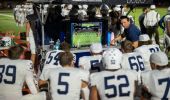
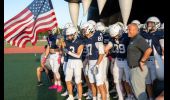
As the excitement builds in support of the current edition of the Golden Tornado football team and its run to the Kansas Class 4A State Championship game, former players, coaches, fans and alumni have turned to the history books to gain a perspective on just how special the 2013 season is for Field Kindley.
“There are a lot of great players and great teams that never got to experience the playoffs let alone a state championship game,” said Jim Owen, a 1965 Field Kindley graduate who returned and served on the football coaching staff from 1972-1993 and athletic director from 1993-1996.
The Kansas State High School Activities Association (KSHSAA) began a football playoff format in 1969 to determine championships. Prior to 1969, state championships were determined by a poll of Kansas’s media outlets.
“The newspapers voted on it, usually Wichita, Topeka, Salina, the bigger newspapers, it was called an AP (Associated Press) poll,” Owen said.
While further research will be necessary to complete a more detailed history of the Golden Tornado program including scores, opponents and where the games were played, according to the documents discovered in the Field Kindley High School vault, the first known high school football team in Coffeyville played in 1899 and posted a 6-1 record.
Coffeyville also had a high school team from 1900-1908, but the only information available at this time include the name of the head coach and a roster, no scores, no records, except for the 1908 team which went 5-1.
From 1909-1914, a note inside the record book indicates no football was played as determined by a ruling of the board of education for its “roughness” and “brutality.”
Coffeyville has fielded a football team every year since 1915 and the period from 1915 to 1968, before the advent of the KSHSAA playoff system, there were seven undefeated teams — Arthur Kahler’s 1926 team went 8-0, Mose Neis’ 1929 team went 6-0-3, Leland Lewis’ 1938 team went 9-0-1 and Andy McClure, who coached from 1946-1957, had three perfect 9-0 seasons in 1946, 1952 and 1956.
Glen Percy’s 1967 team, only two years shy from the KSHSAA playoff format, went 9-0.
“There was a team in the 1800’s,” Owen said. “That’s the earliest I could remember seeing scores. Coffeyville was in the Verdigris Valley League with schools like Bartlesville, Nowata, Dewey; I think even Edna had a high school team in it. You played who ever you could find.
“There wasn’t much of a clamor for a playoff system until the 60’s when (Don) McWhirt’s teams had a good stretch.”
Paul Crandell, an all-state tight end for Coffeyville in the fall of 1950, graduated in 1951 before having celebrated college career. He was the freshman athlete of year at Coffeyville Junior College as a freshman and sophomore (lettered in football, basketball and track) and then earned a scholarship to Kansas State where he earned a starting spot as a tight end before an injury knocked relegated him as a back up.
After a semester at KSU, he enlisted and served the United States during the Korean War. Upon his return and with a semester of eligibility left, he earned a scholarship from legendary coach Carnie Smith at Pittsburg State and helped the Gorillas win the 1957 NAIA National Championship catching two touchdowns, including the game-winner.
“My junior and senior year (1949, 1950) we won the SEK back-to-back,” Crandell said. “Winning the league was a big deal during that time because Pittsburg, Parsons, Fort Scott were always tough.”
Crandell tried to recall as many of the best players from an era before the football playoffs.
“In the 1940’s, it was Floyd Temple, Bill Mace, Glen Tongier,” Crandell said. “Bill was an all-American in high school, at junior college and an outstanding linebacker at KU. Floyd was an outstanding baseball player who played for the Jayhawks 1949 Big 7 Conference championship team and then coached KU from 1954-1981 before he became assistant athletic director from 1981-1992. His number 13 is retired on the stadium wall in Lawrence.
“Glen was letter winner in football, basketball and track in high school and Coffeyville Junior College, but he was known as great tennis player. He went to KU to play tennis and was a Big 7 champion and later coached the KU tennis team.”
The 1950’s included Richard Andrews, Jack Kiddoo, Jim Jarrett, John Stephens, Henry Schichtle.
Crandell said Andrews (FKHS ’50) was a captain and all-conference performer in football, basketball and track and won the pole vault at the KU Relays. He was a letter winner at Coffeyville Junior College in football, basketball and track and won the junior college state championship in the pole vault. After he returned from the Korean War, he attended Pittsburg State.
“Jack Kiddoo was the quarterback for the ’52 team that was undefeated and won the SEK,” Crandell said. “He was all-state in football and basketball, went to Kansas State on a scholarship and was a three-year letter winner as a guard.
“Jim was all-conference in football and basketball as a junior and senior and all-state in football as a senior. He went to KU and played both running back and defensive back.
“John Stephens was two-time all-conference at offensive line, end and kicker and all-state as a senior. He was big, 6-foot-7 and basketball was his sport. He led the SEK in scoring as a junior and senior. Played hoops for Missouri and was on the cover of Sports Illustrated with Wilt Chamberlain.
Schichtle (FKHS ’59) was an all-conference quarterback and basketball player. After Field Kindley, he was a two-year starter at Coffeyville Junior College before continued his career at Wichita State. He was an all-Missouri Valley Conference performer in 1963 and honorable mention all-American. He was drafted by the New York Giants in 6th round of the 1964 NFL Draft and played for New York and Atlanta in NFL, Vancouver and British Columbia in the Canadian Football League.
In the 1960’s, George Haynes and John McCutcheon were both standouts for Field Kindley who went to play at the University of Tulsa. Owen said Haynes signed with the Pittsburgh Steelers as free agent in 1973.
In the early 1970’s, defensive standouts like Terry Beeson and Phil Neely missed out on the early years of the playoffs. Beeson continued his career at KU and was drafted in the second round of the 1977 NFL draft by the Seattle Seahawks.
Field Kindley’s first playoff appearances, under head coach Doug Lee, were short lived in the 70’s.
“This was before the start of district alignments and district play,” Lee said. “Everyone was awarded points on your wins. We would always come across a Pittsburg or Parsons team, lose one game, have a 8-1 or 7-2 record, then we would end up as the No. 8 seed and have to play the No. 1 seed in the first round. We lost to the eventual state champs Bishop Miege and Emporia the first few years.”
In the 1980’s, the Southeast Kansas League was split into an upper and lower division. Field Kindley was in the upper division with Pittsburg, Independence, Fort Scott and for a three-year period, Ottawa. Twice Coffeyville made the playoffs in the 80’s, 1986 and 1989.
The 1989 Golden Tornado, which is included in the debate as one of the best teams in the history of the program, featured two BFS all-Americans in Chad Ullom and D.J. O’Connor and a superstar tailback in Cedric Colbert and was coached by the late Kent Brown.
Coffeyville defeated defending 5A state champion and No. 1 ranked Pittsburg during the regular season and then defeated top-ranked Arkansas City in district play to earn the No. 1 ranking in the state and a district title.
What was the reward in the first round of the playoffs? A rematch with Pittsburg and a 21-20 loss to the Purple Dragons.
“There was some of the best athletes on that ’89 team,” Owen said. “Ullom, O’Connor, Colbert, Chris Naden, Brian Anderson, Mike Pauzauskie, Kevin Elias, Mike Evans-Lombe.”
Field Kindley would not see the playoffs again until 1993, head coach Kent Newby and the all-state tandem of quarterback Mondriel Fulcher and receiver Jason Homer combined to lift Coffeyville to a district title before a first round exit to Bishop Miege.
In 2000, the KSHSAA changed playoff-qualifying standards to allow district champions and district runner-ups to advance to postseason tournament play.
Field Kindley qualified for the postseason in 2001, 2003, 2004, 2008, 2009, 2010, 2011 and 2012.
The 2003 team, guided Rich Geisen, was the first team to ever reach the state quarterfinals with victories over Girard and Paola before losing to Topeka Hayden. Ironically, the quarterback for the 2003 edition was Jaryd McCullough, a current assistant coach on the 2013 staff.
“It’s always the goal, at the start of every season, win state,” Lee said. “I’m sure it was no different for this Coffeyville team as it was for every team that has come before them. I hope they win it; the program deserves it, the school deserves, the community deserves it. It’s been a long time coming.”
Craig Hull is a former sports writer and sports columnist for The Joplin Globe and current director of the Joplin Sports Authority, the regional sports commission in Joplin, Mo. In his spare time, he works on building accurate sports records and sports history documentation. He can be reached via e-mail at craighullsports@yahoo.com.




Use your Facebook account to add a comment or start a discussion. Posts are subject to Facebook's Terms of Service and Privacy Policy. Your Facebook name, photo & other personal information you make public on Facebook will appear with your comment.


